
One of the many effects of the COVID-19 pandemic is a change in folks’ shopping habits. First we saw panic hoarding of essentials, followed by a shift to online orders and deliveries. A recent survey conducted by Agility PR Solutions on virus consumer impact found that 30 percent of respondents are shopping less frequently in-store, and 21 percent say they are shopping more frequently online. Concomitant with the shift to shopping online is increasing Internet fraud: attempts to scam consumers out of sensitive personal information; to impersonate businesses using stolen credentials; to break into consumer devices and networks to obtain access to sensitive data; and holding systems and data ransom. Apart from exercising secure behavior online (not sharing more information than necessary, using strong [long] passwords, avoiding suspicious forms of payment, treating online deals with suspicion and preventing phishing, not clicking on attachments from unknown sources, keeping systems updated with latest software patches, etc.), it is also important to examine website trust indicators. This means checking to verify that websites are legitimate. For years, Internet users were told to “look for the lock” to know that a website was secure. In 2019, several browsers extended this by changing how they display legitimate sites. Consumers can look beyond the lock by clicking on the padlock to view the certificate information and organization details. At the very least, do not use sites that fail to encrypt data transmissions using TLS—Transport Layer Security, formerly known as Secure Sockets Layer, or SSL.
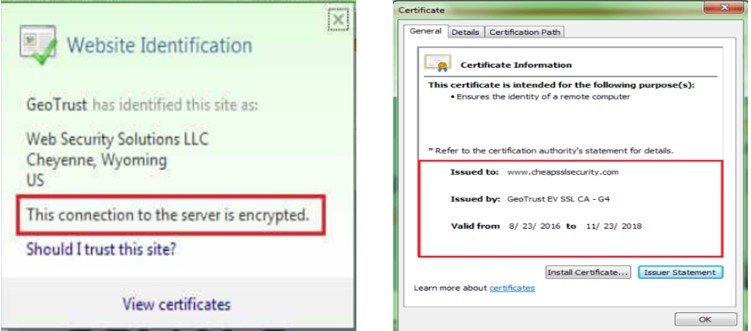
As companies and organizations offer more online services and transactions, Internet security becomes critical to ensure that sensitive information—such as credit card numbers—is transmitted only to legitimate businesses. This means organizations must add TLS support to their websites, which requires acquisition and use of digital certificates. But there is a lot of confusion when it comes to certificates and establishing trust.
What is Machine Identity Management?
Enterprises spend billions each year on Identity and Access Management, most of it to protect digital human identities—usernames and passwords. Not much gets spent on protecting machine identities, even though our entire digital economy hinges on secure communication between machines. Machines are driving unprecedented improvements in business efficiency, productivity, agility, and speed, but they do not work in isolation, as they need to be communicating with other machines. Before machines can communicate securely, they need some way to determine if the other machine is trustworthy. When online, humans rely on usernames and passwords to identify and authenticate themselves to machines. Machines also have digital identities, but they do not rely on usernames and passwords for identification and authentication. Instead they rely on digital certificates and cryptographic keys that serve as machine identities.
TLS Certificates
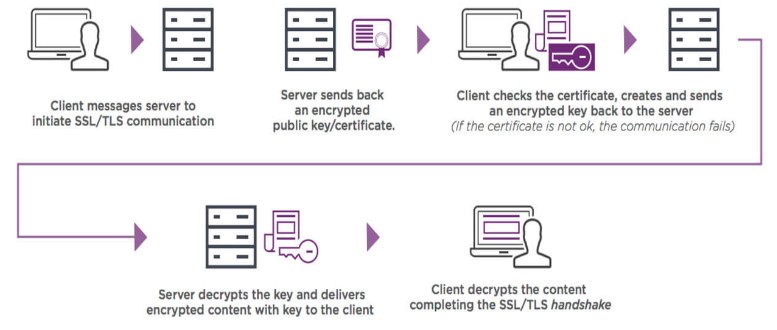
At the beginning of every secure communication, machines check these certificates as digital identities to establish trust, authenticate other machines, and enable encrypted communication. TLS certificates are digital passports that provide authentication to protect the confidentiality and integrity of website communication with browsers. The TLS certificate's job is to enable secure sessions with user browsers via the TLS protocol. This secure connection cannot be established without a digital certificate, which connects company information to a cryptographic key. The following is a high-level diagram of how TLS connections work:
Issue with Self-Signed Certificates
Certificates are normally obtained from a Certificate Authority, or CA: a trusted company that provides certificates, and who participate in a chain of trust that allows end-user browsers to validate that the certificate is indeed trustworthy. Companies can also create self-signed certificates, without going to a CA. The industry has long debated the benefits and risks of using self-signed certificates. To understand this debate, requires establishing a baseline understanding of why certificates exist. The usual (mis)understanding is that certificates exist to perform encryption; this is incorrect. Encryption is not why certificates exist. Certificates exist to prove identity. Cryptographic keys are a means by which they do so, and once the identity is established between two parties, encryption is then used to exchange information securely between them. For example, Amazon.com’s TLS certificate is not there to encrypt your data: it is there to prove that you are sending sensitive data to actual Amazon.com, and not to an imposter. Encryption is the means by which that happens, but the encryption itself is pointless if the data is going to the wrong entity. Identity is why certificates exist. As a means of proving identity, a self-signed certificate is like having a homemade passport—nobody should trust it. The identity of Entity A can only be proven to Entity B by means of a third-party verifier, Entity C, whom Entity A and B both trust. The third-party verifier cannot also be Entity A (“trust me! I am who I assert myself to be!”). A lot of enterprises believe that self-signed certificates are primarily useful in test environments, but even then, they are a poor idea because they do not allow testing the real scenario. For one, they are not testing the ability to use certificates that actually have any trust associated with them, and important test scenarios such as Certificate Revocation List (CRL) validations will be skipped since they do not apply to self-signed certificates. On top that, this practice could easily get propagated to production systems. Many enterprises also believe it is OK to use self-signed certificates on internal sites such as employee portals, even though doing so results in browser warnings. Organizations typically advise employees to simply ignore the warnings, since they know the internal site is safe. This can encourage dangerous public browsing behavior: employees accustomed to ignoring warnings on internal sites may be inclined to ignore warnings on public sites as well, leaving them, and the organization, vulnerable to malware and other threats. Major breaches have happened where exfiltration of data through encrypted tunnels using self-signed certificates went undetected because it looked like regular and legitimate traffic. Several malware and banking Trojans use self-signed certificates that trick users into downloading malicious code; cyber-criminals also use self-signed certificates to conduct man-in-the-middle (MITM) attacks to impersonate banking, e-commerce, and social media websites. Once compromised, a self-signed certificate poses further risks: an attacker who has already gained access to a system can spoof the identity of the victim. Organizations also cannot revoke self-signed certificates, and must instead replace or rotate them, which cannot be done rapidly. Attackers are exploiting self-signed certificate use, so enterprises should stop using them unless they are used between components or services residing within the same machine—implying “I am who I assert myself to be” is valid when I only have to trust myself.
Articles
Home Key and Secrets Management Bring Your Own Key Exploring Cloud Service Providers' Crypto and Key Management Services Importance and Advantages of Format Preserving Data Protection Recommendations for Implementing the Right Cloud Crypto and Key Management Solution Online Shopping Security in the Age of COVID-19 Published Articles and Press Releases Videos