

Don’t Cut Corners: Why Certified Auto Body Repair Service Is Critical to Occupant Safety
A collision does more than wrinkle metal and crack paint. It disrupts a vehicle’s safety systems, many of which hide in plain sight. I have torn down cars that looked “minor” from the outside yet showed kinked rails, compromised adhesives, and sensors knocked a few degrees off axis. Those details decide whether airbags deploy on time, whether a roof holds during a rollover, and whether a windshield stays bonded in a second impact. That is why a certified auto body repair service is not a luxury, it is a safety requirement.
Modern cars are engineered as systems, not parts
Crash energy travels along intended paths. Engineers map these paths so forces bypass the passenger cell, sacrificing crumple zones to protect life. If a shop pulls a rail the wrong way, substitutes the wrong thickness steel, or welds where a rivet was specified, the next crash will not follow the playbook. I have seen a late-model sedan repaired with non-structured seam welds that looked tidy but hardened a designed buckle zone. The next fender bender drove force straight into the A-pillar, bending the door frame and trapping the latch. Cosmetic perfection, structural failure.
Certified auto body repair shops follow manufacturer repair procedures, use model-specific equipment, and prove their work through training and audits. That discipline restores the vehicle’s original behavior. Uncertified shortcuts might get you back on the road quicker, yet they can erase the very engineering that made you walk away from the first crash.
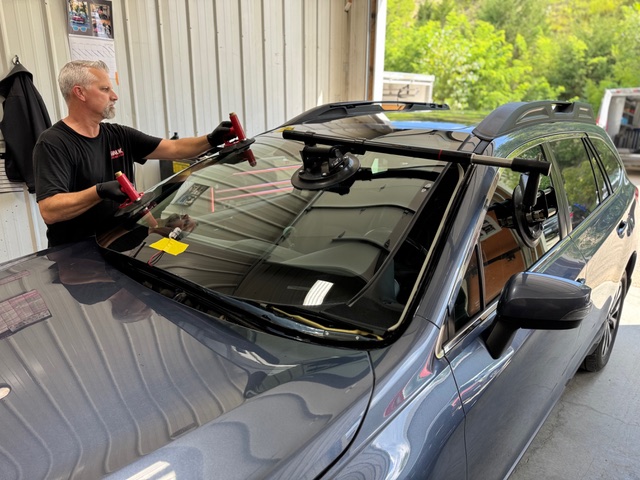
Windshields and glass do more than keep out the rain
Auto glass repair touches safety in two major ways. First, the windshield is a structural member. It supports airbag deployment and contributes to roof crush strength. The urethane adhesive matters. Use the wrong product or skip the required cure time, and a frontal airbag can push the windshield outward, leaving the passenger with no cushion. Second, modern driver assistance systems rely on the glass as a mounting base. Cameras and rain sensors sit millimeters from where the calibration assumes. A small deviation, or a wavy aftermarket pane, can throw off lane-keeping and automatic braking.
Quality glass repair services follow OEM-approved adhesives, document safe drive-away times, and recalibrate cameras after replacement. On a 2022 crossover in my shop, we spent two hours calibrating the forward-facing camera after a windshield swap. The pre-calibration test showed a 3-degree yaw error, enough to cause late braking commands. Cheap glass and a quick install would have left that family with a silent fault waiting for a high-speed surprise.
ADAS calibration is not optional
Advanced driver assistance systems depend on precise geometry. A radar needs correct height and pitch. A camera needs a known focal point relative to the front axle. After a collision or glass work, these values change. Calibrations can be static, dynamic, or both, and the procedure differs by brand and trim.

One case still sticks with me. A compact SUV came in after a “light” front hit. The bumper cover was replaced, but the radar bracket behind it had a barely visible bend. On the test drive, adaptive cruise would surge at about 40 mph, misreading distance. Proper repair required replacing the bracket, installing a new radar, and running a static calibration with targets set at exact distances. That is the difference between technology that helps and technology that hurts.
Materials, bonding, and the myth of one-size-fits-all
Not all metal is equal. Ultra high-strength steel cannot be heated or pulled beyond specific limits without losing its designed strength. Aluminum needs different tools to car window repair services avoid cross-contamination and corrosion. Structural adhesives have cure schedules that interact with humidity and temperature. A certified auto body repair service understands these boundaries and documents them in the repair plan. A bargain estimate that glosses over material type and bonding method often costs less because it does less.
Where corners get cut, and why it matters
Shops without current training or OEM access often rely on memory, universal procedures, or generic scanners. That might seem fine for a bumper skin or a mirror, but it falls short when the vehicle depends on a net of sensors, reinforcements, and precise seams. Paint can hide seam sealer voids. New clips can hide a misaligned sensor. A perfect panel gap can hide a rail that is a few millimeters short. Those millimeters matter when a seat belt retractor calculates load or an airbag control module uses deceleration data to fire at a specific millisecond.
A quick checklist for choosing the right shop
- Look for brand-specific certifications and ask to see current documents.
- Request the written repair plan with OEM procedure references.
- Confirm ADAS calibration capability and see the before and after reports.
- Ask what adhesives, welders, and rivets they will use, and why.
- Expect a test drive and quality control sheet, not just a handoff at the curb.
The insurance conversation, handled with facts
Insurance carriers aim to control costs, but safety-critical steps are not fluff. If a policy or adjuster pushes for used or aftermarket parts, or declines calibration, a reputable shop will explain the risk in plain language. For example, some automakers prohibit sectioning on specific rails and require replacement. Others specify OEM glass when cameras mount to the windshield. I advise customers to ask the adjuster to cite the OEM procedure that supports the cheaper route. The debate usually ends when the conversation moves from price to published standards.
When repair is not the safe option
Total loss determinations feel harsh, yet sometimes they are the only way to avoid a compromised structure or a repair cost that eats into critical steps. If crush paths are distorted at multiple nodes, or if mounting points for restraint systems have moved beyond strict tolerances, a proper repair becomes impractical. A conscientious auto body repair service will say so early, even if it means losing the job, because the alternative is rebuilding a safety gamble.
Final thoughts from the shop floor
The right auto body repair is meticulous, sometimes maddeningly slow, and governed by measurements you cannot see from the sidewalk. Good glass repair services treat a windshield like a structural panel, not an accessory. Skilled technicians chase millimeters and milliradians because your airbags, belts, and cameras do too. When a shop carries the right certifications, uses OEM data, and proves calibrations with printed reports, you leave with more than glossy paint. You get the original safety the car was built to deliver, ready for the moment you hope never comes.