

From Dent to Defense: How Quality Auto Body Repair Protects You on the Road
Minor damage rarely feels urgent. A door ding, a cracked fog light, a small windshield chip, they seem cosmetic, the kind of thing you can live with for a few months. That delay is where safety trouble starts. Proper auto body repair is not just about restoring shine, it preserves the geometry, visibility, and crash performance your vehicle was engineered to deliver.
Why structure matters more than paint
Modern vehicles depend on precisely formed metal, adhesives, and plastics to distribute crash energy. The front bumper cover, often dismissed as “just plastic,” hides crash beams, absorbers, and sensors that talk to airbag modules and advanced driver assistance systems. I have seen a sedan with a barely creased hood after a parking misjudgment, only to find a kinked front apron underneath. Left alone, that small deformity shifted the fender line by a few millimeters, enough to throw the headlight aim high and right. On a dark two-lane highway, that misalignment blinds oncoming traffic and shortchanges your own down-road reach.
Even a modest rear hit can push the trunk floor forward and load the rear suspension. If a shop measures and straightens the structure on a calibrated bench, the car tracks straight, tires wear evenly, and the stability control behaves predictably. Skip that step, and the alignment may never hold, steering corrections stack up, and braking distances creep higher because the contact patch is not square under stress.
Glass repair is more than clear vision
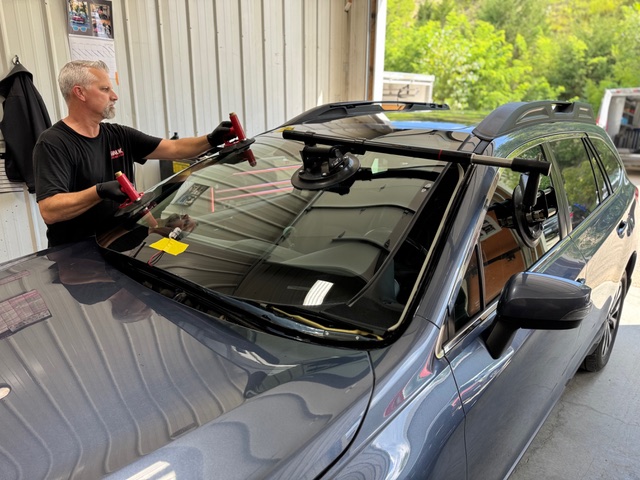
Auto glass is part of the safety cell. Windshields on most late-model cars are bonded to add torsional rigidity. A chip the size of a grain of rice can propagate into a palm-wide crack after a hot day followed by a cool night. Good glass repair services stop that spread by injecting resin that restores strength and clarity. Wait too long, and replacement becomes the only safe path.
There is another layer. Many vehicles place camera modules behind the windshield to support lane keeping, adaptive cruise, and collision warning. Any windshield replacement demands post-install calibration of those systems. I have watched test targets and scan tools bring a misreading camera back within spec after a replacement that, to the naked eye, looked perfect. If an auto body repair service replaces glass without calibrating the sensors, the car can misjudge lane lines or brake later than expected. That is not a cosmetic risk, it is a safety gap.
Paint, corrosion, and long-term strength
Paint protects more than the resale value. It seals the metal. A chipped edge on a wheel arch exposes bare steel, road salt finds it, and rust blooms from the inside out. Two winters later, that once-cosmetic nick becomes a perforation near a seatbelt anchor. Quality auto body repair shops sand to clean metal, apply epoxy primer, and build the finish back in layers so seams stay sealed. The difference shows up three to five years down the road when drain holes are open, pinch welds are intact, and the car still shrugs off a pothole auto glass repair without a new rattle.
Sensors, trim, and hidden systems
Behind trim panels live radar units, ultrasonics, and wiring looms. Reusing a bent bracket or installing a bumper cover without the correct auto body repair retaining clips can swing a radar beam a few degrees off center. That small error causes blind-spot warnings to trigger late or not at all. Shops with the right repair information and tooling test these systems after repairs. They check connector pin tension, verify module software levels, and document calibrations. It is unglamorous work that pays off the first time an emergency stop assistant intervenes correctly.
Choosing the right shop
The best repairs follow the vehicle maker’s documented procedures, not generic rules of thumb. A reputable auto body repair service will talk through parts choices, measurement plans, and calibration steps. They should be comfortable using OEM position statements and explaining why certain bolts are single-use or why sectioning a rail is not allowed on your model. When a shop hesitates to perform or sublet ADAS calibration after auto glass repair, that is a flag.
A quick in-person check helps. Look for a clean metal bench with measuring equipment, a dedicated area for dust-sensitive work like glass installation, and repair plans attached to vehicles, not just verbal estimates. Ask to see examples of weld test coupons, the small sample welds techs make to verify settings before touching your car.
The small stuff that keeps you safe
Tiny defects add up. A scuffed wheel liner that no longer clips in lets water spray onto a fuse box. A missing foam absorber behind a bumper cover changes how the cover collapses and pops airbags late. A cracked headlamp lens fogs under temperature swings, scattering light and reducing contrast in rain. The right shop catches these details because their process pushes them to look past the obvious dent.

Here is a simple owner’s checklist after repairs that fits in a glovebox:
- Headlights aimed evenly and not dazzling oncoming traffic, test on a flat wall at night.
- Steering wheel centered on a straight road, no pull or vibration at highway speed.
- ADAS indicators show normal status, and features like lane keep and blind-spot alerts behave consistently.
- All glass is free of distortion in your line of sight, and any replaced windshield is documented with a calibration report.
Cost, timing, and smart trade-offs
Quality does not always mean the highest bill, but rushed work is rarely cheap in the long run. There are reasonable compromises. Cosmetic work on an out-of-sight inner panel can be minimal if corrosion protection is thorough. Using certified aftermarket parts is fine for non-structural trim when fit and material match are verified. Where you should not compromise: structural parts, restraint system components, adhesive types, and glass that carries sensors. For these, the cost difference buys back designed crash performance and reliable driver assistance.
A dent is not just a dent. Handled well, repairs restore more than looks. They return auto body repair service the car’s quiet predictability, the way it brakes straight on a wet exit ramp, the clarity of a windshield free of stress and glare. That is the real promise of skilled auto body repair, backed by careful auto glass repair and thoughtful calibration. It is not vanity, it is defense.