Safety First: How to Spot an Auto Body Repair Shop That Does the Job Right
When a collision or stray rock leaves its mark, you are not just fixing paint, panels, or a windshield. You are restoring crash management, visibility, and the way a modern car senses the road. Good auto body repair is safety work. Get it wrong and airbags deploy late, advanced driver assistance systems misread the lane, or glass shatters easier in a second impact. The right shop treats your vehicle as a system, not a stack of parts.
What a competent shop looks like when you walk in
A professional operation makes itself obvious. The estimate area is orderly, with repair plans written in plain language. Technicians wear proper eye and respiratory protection, not improvised gear. Panel racks keep parts off the floor. You should see welders, rivet guns, and glue-bonding tools specific to aluminum, high-strength steel, and composites. If the front area is clean but the back looks like a scrapyard, that gap in discipline often shows up in the work.
Ask how they build estimates. A seasoned estimator references OEM repair procedures, not guesswork. For late-model vehicles, they should pull manufacturer documentation for sectioning limits, adhesive types, corrosion protection, and calibration steps. A printed or digital copy attached to your estimate is a green flag.
Certifications that actually matter
Certifications do not guarantee perfection, but they are strong indicators that a shop invests in training and equipment. I look for at least one of these: I-CAR Gold Class, an automaker network such as Toyota, Honda/Acura ProFirst, Ford Certified, or a premium program like Audi or Tesla. Each program requires proof of specialized tools, welding tests, and continuing education. If a shop claims certification, check it on the organization’s website. Real programs list the shop’s name and address.
Insurance “preferred” status is not a credential by itself. Some windshield repair options direct-repair programs focus on cycle time and cost controls. That can be fine if the shop anchors its process to OEM procedures, but ask to see the documented steps for your repair.
Structural integrity before cosmetics
Paint can hide a lot. Structure cannot. A careful shop verifies chassis measurements against factory specs on a frame rack or electronic measuring system, not by eyeballing gaps. I have seen vehicles declared “good to go” that were 4 to 6 millimeters out of spec at a crush box. That small misalignment changed airbag timing models and tire wear. You want printouts or screenshots showing the measurements before and after the pull.
For welds, look for resistance spot welders with squeeze force and current control, plus silicon bronze MIG where specified. On high-strength steel, the wrong cut or heat input weakens the rail. A tech who says “we’ve always done it this way” is a red flag on late-model platforms.
The quiet complexity of glass and sensors
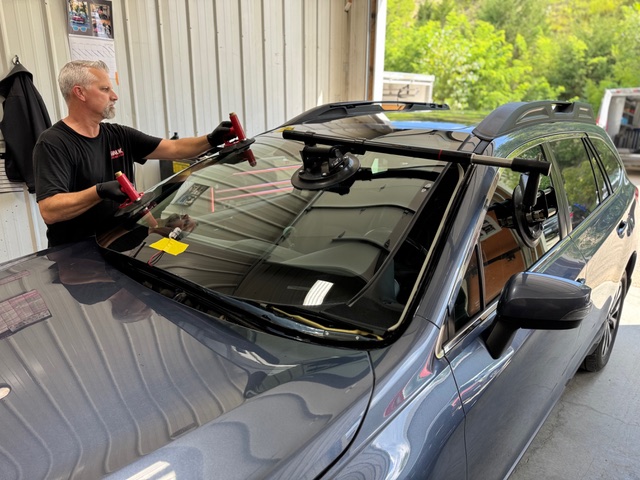
Auto glass repair is now intertwined with safety systems. A windshield holds a camera bracket that guides lane-keeping, adaptive cruise, and collision warning. If the glass is not the correct optical spec or the bracket sits a degree off, the camera reads the world wrong. Good glass repair services follow OEM glass part numbers, use urethane with proper cure times, and document camera calibration. Expect a calibration report, often from targets and scan tools like OEM software or approved aftermarket suites. If a shop says “the car will relearn by itself,” press for details. Some systems do, many do not.
Side glass and backlites matter too. Acoustic and antenna-integrated glass is not a cosmetic option. Replacing it with the cheapest generic pane can kill radio performance and increase cabin noise, which distracts drivers.
Scans, calibrations, and test drives
Modern vehicles need three digital touchpoints: a pre-repair scan, an in-process or post-repair scan, and a documented calibration where required. The pre-scan reveals hidden issues like stored crash data, impact sensor faults, or radar alignment errors. The post-scan confirms everything is cleared and communicating. Calibrations depend on the system, but they often require level floors, specific target distances, and ballast in the seats or fuel to stated levels. A proper road test, typically 10 to 20 miles with a checklist, verifies ADAS behavior, alignment feel, and wind noise.
Paintwork that lasts
Good paint is chemistry and patience. You want a downdraft booth, digital color matching, and paint manufacturer certification. A shop that uses a spectrophotometer will get a closer match on tricky pearls and tri-coats. Ask about corrosion protection in hidden areas. After repairs, inner seams should have seam sealer, cavity wax, and edge coating. The finish should feel uniform, with no dry spray at panel edges and no overspray on glass or trim.
Questions that separate the pros from the improvisers
- Can I see the OEM repair procedures you’ll follow for my vehicle’s VIN, including calibration steps?
- Will you provide frame or structural measurement reports before and after repairs?
- What scans and calibrations are included, and will I receive printed results?
- Do you use OEM glass and mounting hardware for camera-equipped windshields, and who performs the calibration?
- What is your workmanship warranty, and how do you handle warranty claims?
Price, timeline, and parts choices
A precise estimate may be higher than a quick guess, because it includes procedures you would rather know about now than discover at delivery. Expect variability in parts strategy. OEM parts fit and finish are consistent, which matters for safety components, structural parts, and glass in particular. Quality aftermarket parts can be acceptable for non-structural trim. Reconditioned or recycled parts are a judgment call. I am comfortable with recycled OEM doors and hoods if the shop measures and refinishes them correctly, less so with repaired bumper absorbers or any part tied to crash energy management.
Timelines shift when hidden damage appears or calibrations require outside scheduling. A shop that calls you early about a delay is managing the job. Silence until pickup day is not.
How to assess results on delivery day
Arrive in daylight. Panel gaps should be consistent left to right. Door edges should not chip the paint when closing. Open the hood and look for matching fasteners and even seam sealer. Turn on every light and sensor. On the test drive, note steering centering, wind noise around the windshield, and ADAS performance. If lane-keeping warns constantly on a straight road, calibration may be off. Do not hesitate to leave the car for correction. A reliable auto body repair service stands behind its work and fixes misses without drama.
Finding the right auto body repair shops is less about flashy lobbies and more about process, documentation, and respect for how your car was engineered. When a shop shows you their plan, their measurements, and their calibration reports, you are looking at people who understand that safety is the final product.