
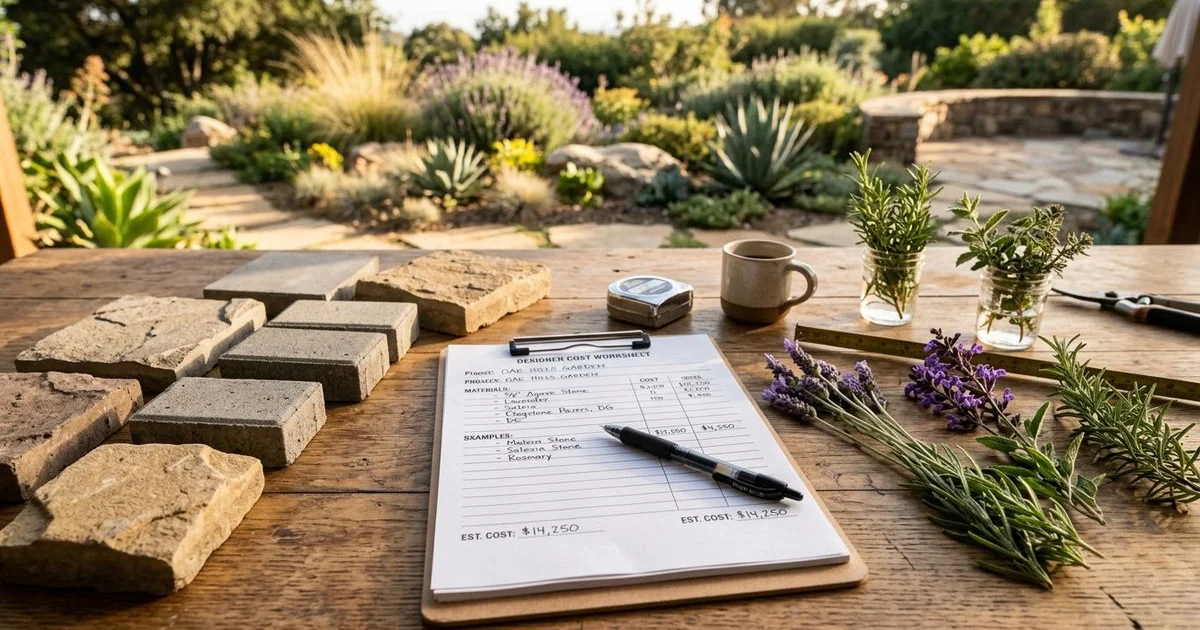
Selecting Plants by Microclimate for Better Landscape Performance
The most successful landscapes I have seen in the San Gabriel Valley were not built around a single “right” plant palette. They were built around observation. A sunny front slope, a narrow side yard with reflected heat, a pocket of cool shade along a north wall, and a lower area where water lingers after irrigation all ask for different plants, even when they sit on the same property. That is the practical side of microclimate planting, and it matters more here than many homeowners expect.
In a region where water-wise design is not just a preference but a necessity, plant choice has to do more than look good on paper. It has to match irrigation patterns, soil behavior, sun exposure, wind, drainage, and slope. California’s water guidance consistently points landscape owners toward those fundamentals before removing turf or changing plantings. That advice is sound because a landscape rarely fails for one dramatic reason. It usually struggles in small ways, first with a plant that wants more water than the rest, then with a slope that sheds irrigation too fast, then with a hot wall that bakes the roots by midafternoon. By the time those issues are visible from the street, the underlying mismatch has already been there for months.
Microclimate is the real design unit
When people say they want a drought resistant landscaping plan, they often mean they want plants that can survive on less water. That is part of it, but it is only part. A plant that performs well on one part of a lot can fail on another part of the same lot if the exposure changes enough. The sun on a west-facing masonry wall is not the same as morning sun in an open bed. A hillside landscaping project behaves differently from a flat front yard because gravity changes water movement, root anchoring, and erosion pressure. Even a few feet of elevation difference can create a noticeable change in soil moisture and temperature.
That is why microclimate matters. It is the fine-grained reading of a site, not the broad label. On a San Gabriel Valley property, one area may catch intense afternoon heat and reflected light from hardscaping, while another stays cooler because of canopy cover or a building shadow. A corner exposed to wind will dry out faster than a sheltered courtyard. A slope may look dry on the surface but hold enough subsurface moisture to support deeper-rooted shrubs if drainage is handled well. The work is less about finding plants that are “tough” in the abstract and more about placing each plant where its strengths align with the site.
That is also where landscape design becomes more disciplined. Attractive plant selection is not separate from function. The best designs are the ones where aesthetics, irrigation efficiency, and site conditions all reinforce each other. When that happens, maintenance gets easier too. You are not constantly compensating for poor placement with extra pruning, extra water, or repeated replacements.
Start with the site, not the nursery
The most common mistake I see is shopping for plants before reading the yard. A plant can be drought adapted and still be the wrong plant for a hot reflective corner, a clay pocket, or a steep shoulder where water races downhill. Before choosing species, it helps to answer a few basic questions about the property: where does sun hit hardest, where does shade persist, where does runoff collect, and where does wind push through unobstructed? Those questions sound simple, but they reveal the landscape’s working conditions.
Soil also matters more than people think. A plant’s water need is not a fixed number in the real world. Two shrubs with similar irrigation requirements on a reference chart can perform very differently depending on whether the soil is loose and fast-draining or dense and slow to absorb water. This is one reason California’s plant and landscape guidance points users toward region-appropriate water use references such as WUCOLS. It is not enough to say a plant is drought tolerant. What matters is how it behaves in the actual zone it is planted in, with the soil and exposure it will receive there.
If you are planning turf removal, this site reading becomes even more important. A common pitfall is replacing lawn with a random mix of low-water plants and assuming the water bill will drop automatically. Sometimes it does. Sometimes it does not, because the new planting still needs frequent hand watering while it establishes, or because the irrigation zones were never adjusted to reflect different plant needs. The smarter sequence is to evaluate irrigation, soil, sun exposure, and plant selection together. That is the foundation of durable landscape performance, not an afterthought.
The case for matching plants to slope, heat, and runoff
San Gabriel Valley properties often have strong visual character because of terrain. Hillsides and gently sloped lots are part of the regional feel, and they bring a specific set of landscape demands. Slopes need erosion control, careful drainage, and plants with root systems that help hold soil in place. They also need irrigation that does not waste water at the top while leaving the lower section saturated. On a slope, even a good design can fail if the irrigation layout is careless.
This is where plant form matters. Some plants stay too open to stabilize soil effectively. Others spread in a way that helps knit the surface together. Bunchgrasses are often useful in these settings because they add texture and help with soil coverage. California buckwheat is another strong candidate for sunny, well-drained areas because it fits naturally into water-wise planting schemes and can contribute to a layered, resilient hillside planting. California sagebrush, ceanothus, manzanita, monkeyflower, and foothill penstemon also fit well in many local native or climate-appropriate compositions when the site conditions suit them.
The key is not to assume every native is right for every slope. A steep, hot, dry face may be a better match for sun-loving, drought adapted species than a shadier hillside edge that holds moisture longer after rainfall or irrigation. Likewise, a plant that looks perfect in a nursery may not handle the root zone conditions at the top of a compacted embankment or near a drainage path. Good hillside landscaping accounts for these differences before the first hole is dug.
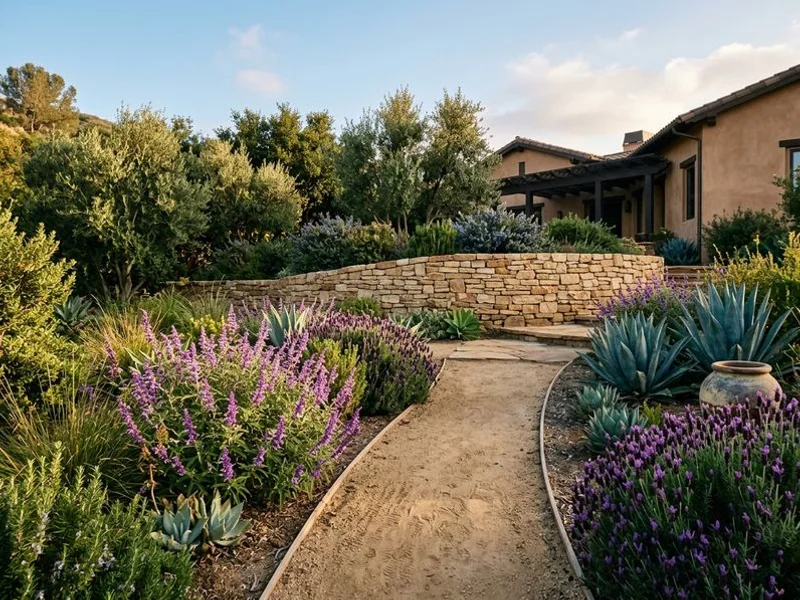
Hardscaping also changes the equation. Retaining walls, steps, paths, and seating areas can reduce erosion pressure when they are designed properly, but they can also create reflected heat and dry pockets. Stone, concrete, and other hardscape materials absorb and re-radiate heat, which can push adjacent plantings into a hotter microclimate than the rest of the yard. That does not make hardscaping a problem. It just means the plant palette near those surfaces should be more carefully chosen. In many landscapes, the plants closest to a wall need to be the toughest, most heat-aware parts of the design.
Native plants, climate fit, and the local landscape character
There is a practical reason California native plants show up so often in water-efficient landscape plans. They are adapted to local conditions, and when they are matched properly to site conditions, they often need less corrective care than plants that are simply attractive in a catalog. In the San Gabriel Valley, that matters because the landscape is not just about holding moisture. It is also about fitting a region that carries a strong hillside and canyon identity.
Plants such as California buckwheat, California sagebrush, manzanita, ceanothus, monkeyflower, foothill penstemon, and bunchgrasses are commonly used because they can support a water-wise landscape while still giving texture, seasonality, and structure. San Gabriel oak is another locally named native species that belongs in the broader conversation about regionally appropriate planting. These plants are not interchangeable, and they are not equally suited to every exposure, but they do share something important. They feel at home in landscapes that must conserve water without looking stripped down or generic.
That point is often overlooked in landscape design discussions. Homeowners sometimes worry that water-wise planting means sacrificing character. In practice, the opposite can be true. A well-composed native planting can look more connected to the site than a collection of overwatered ornamentals that fight the climate every season. The texture of a ceanothus against a rock slope, or the movement of bunchgrasses in a breezy side yard, can give a property a sense of place that never feels forced.
There is also a habitat dimension. The San Gabriel Mountains are home to many rare, threatened, and endangered species, and local planting choices should respect that larger ecological setting. A home landscape will not replicate native habitat, but it can support a more climate-appropriate approach to gardening. That is especially true when plant selection emphasizes water efficiency, local suitability, and firewise planting principles.
Water use, irrigation, and the cost of overgeneralizing
Plant selection by microclimate works best when irrigation is designed with equal care. Water should not be applied uniformly just because a property shares one address. A shady strip under trees, a sun-baked front border, and a slope dropping away from the house will not use water the same way. If the irrigation system treats them as identical, the landscape will show it sooner or later.
California’s landscape water guidance emphasizes looking at irrigation before and after turf removal, not just swapping plants and hoping for the best. That matters because irrigation retrofits are often the difference between a plant palette that thrives and one that limps along. Drip irrigation, properly zoned spray, and careful scheduling all influence how the chosen plants establish and mature. If the system is poorly matched to the new landscape, even a good palette will waste water or suffer stress.
The best results usually come from a slower, more deliberate transition. Existing landscapes can be adjusted in phases rather than all at once. That gives room to observe where water collects, where runoff escapes, and which areas dry out more quickly than expected. It also avoids the common problem of overcommitting to a plant mix before the site has been read properly.
A lot of homeowners assume drought-resistant landscaping means less attention. In reality, it often means more attentive design early on and less intervention later. That trade-off is worth understanding. A landscape that has been planned around microclimate can become easier to maintain because the plants are not constantly fighting the site. But getting there takes discipline in the beginning, especially when the goal is to reduce waste and support long-term performance.
Firewise thinking belongs in the plant decision
In this region, plant selection is not only a water issue. It is also a firewise issue. The way a landscape is planted near the home can matter just as much as what is planted farther out. Ember-resistant zone planning and defensible-space principles are part of responsible landscape work in the foothill communities, especially where slopes, canyons, and seasonal dryness raise the stakes.
This does not mean every landscape has to look sparse or stripped back. It means plant choices need to be made with attention to spacing, maintenance, and location. Dense, resinous, or highly flammable plantings right next to the house are a bad bargain, especially if they are placed there because they looked good in a container. water-efficient landscaping Plants used near structures should be selected for their ability to fit a more careful maintenance regime and for compatibility with the immediate conditions around the home.
That is another place where microclimate matters. The zone near a wall or under eaves may stay drier than the rest of the yard, which changes both plant stress and fire behavior. On a hot, south-facing edge, a plant that tolerates sun but holds too much dry, fine material may not be the right choice near living space. Farther from the structure, the palette can become more layered and ecologically rich. The point is not to eliminate complexity. It is to place each layer where it belongs.
HOA rules, homeowner judgment, and the room to choose wisely
Homeowners in HOA communities often assume their hands are tied when it comes to water-efficient landscaping. California water-restriction guidance makes one thing clear, though, associations cannot prohibit certain water-efficient landscaping choices during drought-related restrictions. That does not mean every design choice is automatically approved, but it does mean there is room to pursue climate-appropriate planting, irrigation efficiency, and turf reduction when the design is sound.
That room matters because many of the best-performing landscapes are not lush in the old, high-water sense. They are restrained, layered, and intentional. They use plant mass where it will help, open space where it reduces water demand, and hardscaping where it supports circulation or erosion control. They also reflect the realities of local climate rather than fighting them.
A good landscape designer or installer will translate those realities into usable decisions. In practice, that means asking whether a plant belongs in a sun pocket or a shaded edge, whether it should be grouped with similarly thirsty companions, whether the slope allows runoff to move safely, and whether the irrigation zone can serve it without wasting water. These are not glamorous questions, but they are the ones that determine whether a landscape settles into itself or keeps asking for repairs.
A practical way to think about plant selection
If I were standing on a site in the San Gabriel Valley with a homeowner, I would not start by naming plants. I would start by noticing conditions. A dry, exposed slope calls for one kind of strategy. A sheltered courtyard calls for another. A narrow strip along a driveway, especially if hardscaping reflects heat into it, needs a tougher palette than a bed that receives filtered light. The plant list should emerge from those observations, not lead them.
That approach also keeps expectations realistic. Some species will need a more careful establishment period than others. Some areas will need soil improvement or drainage adjustments before they can support the intended plants. Some corners may be best suited to a simpler composition rather than an ambitious mix that looks appealing on a drawing but proves awkward in the ground. Judgment matters here. So does patience.
For many San Gabriel Valley properties, the most durable results come from a blend of native plants, climate-appropriate species, smart irrigation, and thoughtful hardscaping. That combination supports water conservation, improves slope performance, and makes the whole landscape easier to live with. It also respects the character of the region. The landscape feels like it belongs there because, in a real sense, it does.
The right plant in the wrong place can create years of frustration. The right plant in the right microclimate can do the opposite. It can simplify maintenance, reduce water waste, stabilize a hillside, soften a hardscape edge, and make a property feel more settled with every season. That is the quiet value of microclimate planting. It is not a design trick. It is a way of working with the site until the site starts working back.